Commercial kitchen integrated pest management addresses the high-moisture, high-grease conditions found in food-handling facilities along Oak Ridge Turnpike, Jackson Square, and the Rutgers Avenue corridor. East…
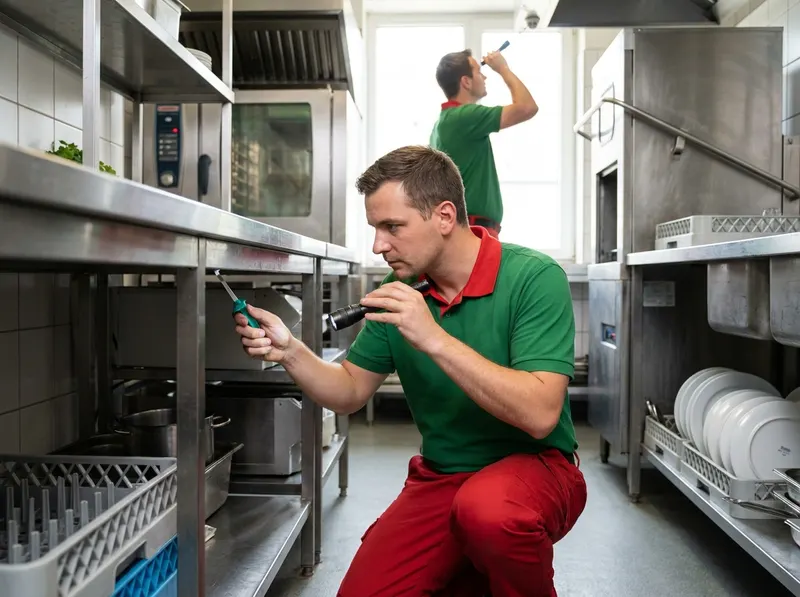
Commercial kitchen integrated pest management addresses the high-moisture, high-grease conditions found in food-handling facilities along Oak Ridge Turnpike, Jackson Square, and the Rutgers Avenue corridor. East Tennessee foothill humidity accelerates organic buildup inside floor sinks, cook-line expansion joints, and under heavy refrigeration units. Rather than relying on airborne pyrethrin foggers that risk food-contact surface contamination and trigger immediate indoor air quality concerns, this defense protocol implements mechanical exclusion and moisture disruption. Technicians seal wall penetrations behind stainless prep tables with copper mesh and silicone sealants, install temperature-resistant door sweeps, and map harborage locations across kitchen footprints ranging from 800-square-foot independent cafes to 10,000-square-foot commercial institutional dining facilities.
Decision-fit considerations determine whether a facility requires standard quarterly commercial perimeter monitoring or intensive kitchen-line integrated pest management. Standard perimeter monitoring protects dry dry-storage warehouses and exterior loading docks; an active commercial cook line requires specialized bio-enzymatic drain foams that break down grease layers where drain fly larvae thrive, paired with targeted, non-volatile hydramethylnon or indoxacarb gel baits injected exclusively into structural crevices. The operational trade-off centers on initial prep discipline: kitchen staff must maintain deep cleaning standards under cooking ranges to remove competing food sources, ensuring bait acceptance by German cockroaches. Facilities operating near Melton Hill Lake or Haw Ridge Park face intensified external rodent pressure along back alley dumpster pads during seasonal temperature drops, necessitating exterior tamper-resistant bait stations spaced every 40 to 50 linear feet.
1. Baseline diagnostic assessment: Technicians map all refrigeration compressor housing voids, beverage line bundles, floor drains, and dry-storage pallet racks using high-intensity inspection lighting.
2. Structural mechanical exclusion: Escutcheon plates, conduit gaps, and floor-to-wall expansion joints receive elastomeric sealant or stainless-steel mesh to eliminate migration routes from adjoining suites.
3. Non-volatile intervention: Application of targeted insect growth regulators (IGRs) and non-repellent micro-encapsulated baits inside hollow equipment legs and wall cavities away from direct food contact.
4. Documentation and trend analysis: Insect monitoring catch counts are recorded in compliance with Anderson County Health Department standards to confirm biological suppression.
Every job gets a firm, written price after a free on-site visit.
Tell us about your commercial kitchen integrated pest management job in Oak Ridge and we'll send a clear, written quote, usually the same day.
 Norevia Pest Protection